What it does, in detail.
Leave, claims and payslips, and the settings that decide how each of them behaves for your company. Everything on this page is included for every company, at one price. Nothing here costs extra.
Leave, defined the way your company defines it.
Custom leave types
Annual, sick, unpaid, compassionate, or whatever your company actually uses. For each type, decide whether it is paid, if it needs approving, if half days are allowed, and whether a balance is tracked at all — unpaid leave usually should not be.
Half day requests at either end
A request can start on a half day, end on one, or both, and the day count follows without anyone working it out on paper.
Counted against your week
Leave is counted against the working week you set and the public holidays on your company calendar, so a holiday falling in the middle of somebody's week off is not taken from their balance.
Automatic and manual approvals
Leave requests go to the person’s manager. Short leaves can be automatically approved up to a limit you set.
Claims with receipts attached.
Sales tax can be included and customized
If your company is tax registered, you can set your country's sales tax. Set it's name, whether its VAT or GST, and percentage to be applied. Export it with taxed and untaxed amounts. Your accountant will thank you for this.
Approving and paying are separate
Approving says the expense is genuine. Paying is a second, deliberate act, recorded with who did it and when — deliberately not automated, because money leaving the company should be somebody's decision.
Automatic when you want it
Claims can be automatically approved under an amount you set, or always, or for a person you have decided to trust.
Import past claims easily with a spreadsheet
Use an Excel sheet or CSV and import your company's claims history easily into our website. With our column mapper system, you can be sure that all the data goes where they should.
Draft it, check it, publish it.
A payslip moves through three stages and employees see only published payslips, so you can correct each month as often as needed before publishing.
Standing pay is already on the draft
Each person's basic salary and their recurring additions and deductions — whether it's a fixed transport allowance or something else — are copied onto every draft as its starting point, whether you raised it yourself or the schedule did.
One-off lines typed on the day
A bonus this month, or a repayment next month - typed straight onto the payslip and gone next month unless somebody types it again.
Employer costs are shown separately
Employer costs appear as a separate line item on the payslip and are never taken off the employee's pay. The person reading it can see what they cost as well as what they take home.
Overtime is shown separately
Overtime gets its own row, and it can cover different dates from the rest of the payslip — useful when last month's overtime is paid with this month's salary. Some countries require a payslip to show it that way.
Published is final
A published payslip is frozen. Change a rule tomorrow and last month keeps last month's figures, permanently. Pay that has already been made is never quietly restated.
Employees can download their own payslips
Every payslip can be saved or printed as a PDF by the person it belongs to, without asking anybody for it.
Every payroll figure comes from a rule you wrote.
Configure and automate your payroll with rules and actions you set. Each rule has two parts: conditions that decide who it applies to, and an action that calculates and applies an amount to each employee individually. No code and no formulas. The rule reads as an ordinary sentence, and HRStuff uses it to run payroll.
Rules are processed from top to bottom. Below is an example that shows a social security scheme written as three rule sets, and the resulting calculation for one employee.
FROM 1 JAN 2026
When Residency is Foreign worker — do nothing.
When Age is at most 55 — deduct 8% of basic salary from the employee, and add an employer contribution of 12%.
For everyone: deduct 5% of basic salary from the employee, and deduct 7% of basic salary from the employer.
Rule Set 1 does nothing on purpose. Because the first rule set that matches stops the search, a rule set at the top that does nothing is how an exemption gets written — everybody it catches never reaches the rule sets below. Rule Set 3 is the catch-all, which is how otherwise gets written. The order you put them in is the whole design.
Set conditions on what you already record
Employment type, status, age at the end of the salary period, years of service, department, job title, name, country, nationality, residency status, marital status, race and religion. Basic salary, additional payments and gross pay. All these and more can be conditions you set to filter applicable employees.
And on the year so far
Gross pay year to date, what this element has already taken year to date, and the employee’s share of it on its own. A rule can ask what it has already done before deciding what to do next.
AND, OR, and groups inside groups
Conditions combine with AND or OR, and a group can sit inside a group — so “full time, and either over 55 or in Singapore” is one rule rather than three.
A percentage, or a fixed amount
An action takes a percentage or a flat sum, from the employee or from the employer, and it can pay money out as well as take it off. One rule can carry several actions at once.
What a percentage charges on
Tick the parts it applies to — basic salary, or additional payments, which is everything else paid that month: overtime, allowances, bonuses and anything typed straight onto the payslip. Or charge on the whole of gross or net pay, where a charge on gross pay sees every payment made before it in the run.
A floor under the base
A percentage can be told to charge only the pay above a figure, so a levy that starts at $30,000 leaves the first $30,000 alone instead of being written as two rules that meet in the middle.
Ceilings, by the month or by the year
A maximum for the month, or one for the whole year that takes only what is still owing in the month it is crossed. The ceiling is applied before rounding, so rounding can bring a held figure down but never back above the limit.
Employee and employer together
One rule can calculate the employee deduction and the employer contribution at the same time, including which amount is rounded first. If written as two separate rules, the total comes out different.
Rounding, to the cent or to the dollar
To the cent, to the nearest dollar, down to the dollar or up to it — and the employee’s share can round differently from the employer’s. That is what lets a scheme round the total one way and each half another.
Shown working, every step
Every amount on the payslip names the rule that produced it, the pay it charged on, and each step after — the ceiling that bit, the rounding that applied. If a figure looks wrong, correct the rule rather than typing over the result.
One record per person, with the paperwork on it.
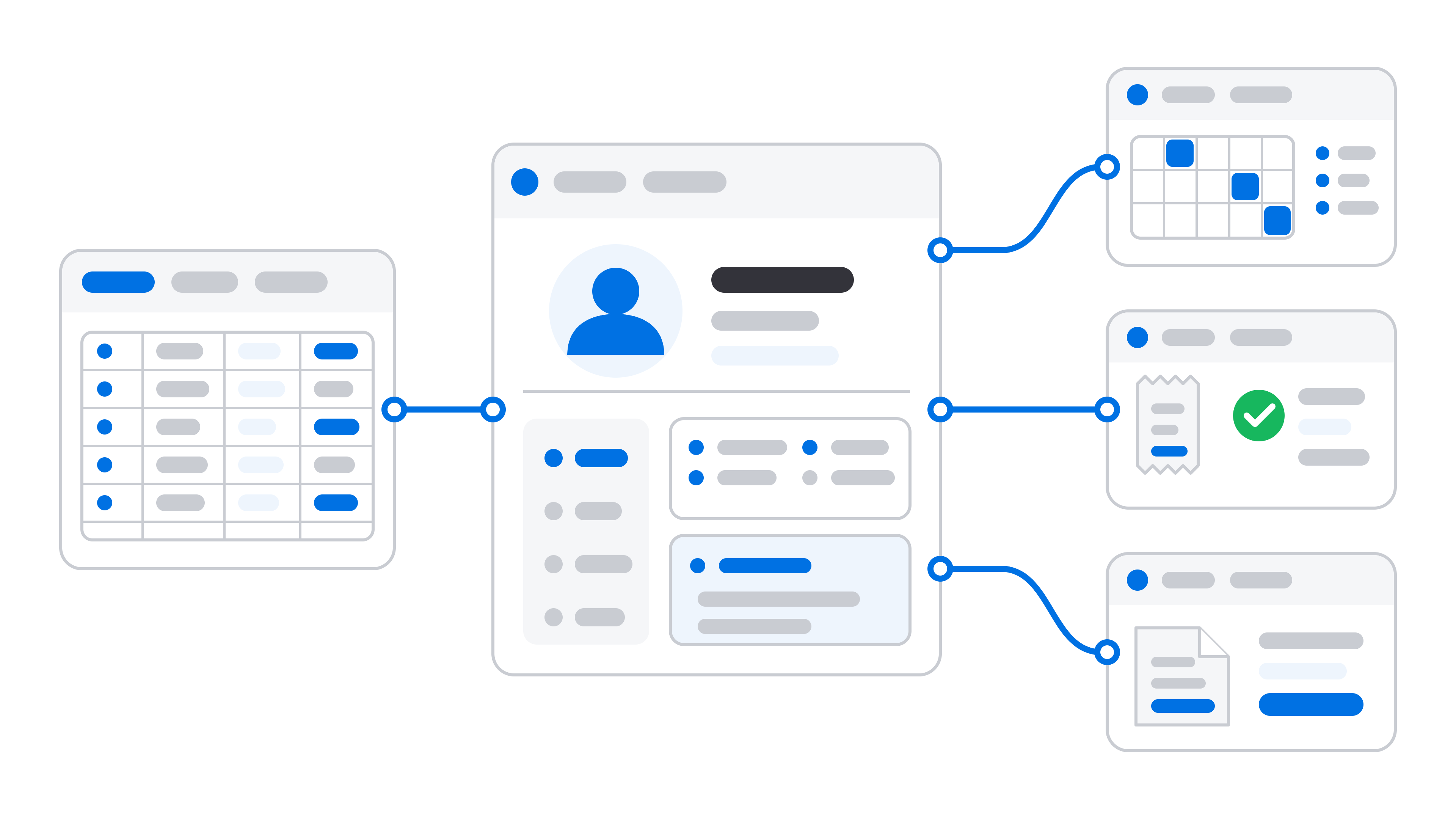
Employee details you actually need
Job title, department, who they report to, employment type, start and end dates, date of birth, residency, nationality and country, salary, bank details, address and an emergency contact.
Contracts and letters filed on the person
Kept with the record itself, the same way a receipt is kept with its claim, so nothing lives in a shared folder that somebody has to remember to tidy.
Import employees from a spreadsheet
HRStuff shows you what will happen before importing: who will be added, whose details will be updated, and which rows it cannot read. With our column mapper, your column headers will not have to match, and you will still be able to import your staff easily and quickly.
And export it too
Employee records export back to a spreadsheet whenever you want them. Your data is never locked in with us.
The settings that stop it being somebody else's software.
Your currency, and your dates
Each company sets the currency it works in and the order it writes dates in — day first, month first, year first, or written out in full — and every page follows.
Your working week
Whether your working week is Monday to Friday, Monday to Saturday, or something else, HRStuff calculates the total amount of leave used automatically.
Your leave year and your payroll year
The leave year starts in the month you choose. So does the payroll year. Payslip drafts can also be raised on a day you pick, and published on another, or neither.
Your own words for leave types and more
Leave types are yours to name. So are the residency categories your payroll rules are written on, because what counts as a right to work differs from country to country.
The parts you only notice when they fail.
An activity log that only grows
Sensitive actions are written to a log that is added to and never edited, so what happened stays what happened.
Your data is yours alone
Every record belongs to a company, and requests for records outside that company return “not found” without revealing whether the record exists.
The cents always add up
Amounts are stored as whole cents. Rounding happens only where your payroll rules specify it, so totals stay consistent.
No outside code libraries used
Most software is assembled from hundreds of free code libraries written by strangers, and a security hole in any one of them becomes a hole in everything using it. HRStuff uses none — every part of it was written for HRStuff.
Run one month of your own payroll this afternoon.
Create your company, bring your staff list in from a spreadsheet, and check a month against your real figures. Reading about it is slower than trying it.
Figures shown on this page are an example. Statutory rates must be verified against your own authority before your first payroll run.